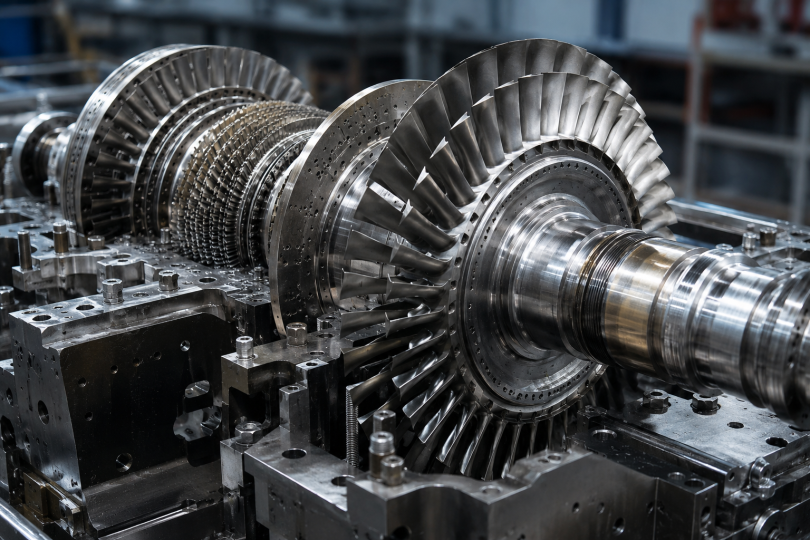

Industrial gas turbines operate under demanding conditions. High temperatures, pressure, vibration, and long operating cycles gradually affect components such as blades, vanes, rotors, combustion hardware, seals, bearings, and other critical assemblies. Replacing every worn component with a new part is not always necessary or practical. Refurbishment can provide another route by restoring usable components to defined engineering standards.
For plant operators, maintenance teams, and equipment owners, refurbished industrial gas turbine parts can offer a practical option for extending equipment service life while managing maintenance requirements. The quality of refurbishment, inspection methods, material knowledge, and dimensional control all influence whether a restored component is suitable for continued operation.
What Refurbishment Means for Gas Turbine Components
Refurbishment is more than cleaning an old component and returning it to service. The process normally begins with inspection and evaluation to determine the condition of the part.
Technicians may examine components for:
- Surface erosion
- Cracks and thermal damage
- Corrosion
- Distortion
- Wear at mating surfaces
- Dimensional changes
- Coating deterioration
- Fatigue-related defects
Depending on the component and its condition, refurbishment may involve machining, welding, heat treatment, coating restoration, dimensional correction, or replacement of damaged sections.
The objective is to return the component to an acceptable engineering condition rather than simply making it appear visually usable.
Components Commonly Considered for Refurbishment
Not every turbine component follows the same refurbishment process. Parts exposed directly to combustion gases often require more detailed inspection because they experience severe thermal and mechanical loads.
Typical components that may be evaluated include turbine blades, nozzle guide vanes, combustion components, transition pieces, seals, shrouds, and selected rotating assemblies.
Blades and vanes may require dimensional checks and surface restoration after exposure to erosion or high-temperature oxidation. Combustion hardware can require inspection for cracking, distortion, and localized heat damage. Sealing components may need attention where wear has increased operating clearances.
The decision to refurbish depends on the remaining material condition, component design, operating history, inspection findings, and applicable engineering requirements.
Why Inspection Determines Refurbishment Quality
A refurbishment program is only as reliable as its inspection process. Before work begins, technicians need to establish what damage exists and whether the component can reasonably be restored.
Visual inspection can identify obvious surface conditions, but many turbine components require additional non-destructive testing. Depending on the component, methods may include dye penetrant inspection, magnetic particle testing, ultrasonic examination, dimensional inspection, or other approved techniques.
Material verification can also be relevant when component identification is uncertain or when repairs require confirmation of the base material. Inspection records provide useful information for determining the repair route and documenting the component’s condition.
A proper inspection process also helps prevent unsuitable parts from entering refurbishment simply because they appear repairable.
Refurbished Components and Maintenance Planning
Maintenance schedules for industrial turbines are often built around planned inspections and service intervals. Component availability can affect how efficiently these activities are completed.
Using refurbished industrial gas turbine parts may provide additional sourcing options for maintenance teams, particularly when new replacement components have extended manufacturing lead times. Refurbished inventory can also be useful for planned outages where certain components need to be available before equipment is opened for inspection.
The suitability of a refurbished part should still be verified against the specific turbine model and component requirements. Part number, dimensions, material, modification history, and inspection documentation should be reviewed before installation.
The Role of Refurbished Industrial Gas Turbine Capital Consumables
Some turbine maintenance requirements involve components that are regularly replaced or renewed during major service activities. These can include seals, filters, gaskets, fasteners, liners, and other service-related items, depending on the turbine design.
The category of refurbished industrial gas turbine capital consumables requires careful consideration because consumable and capital components do not always have the same inspection or reuse criteria. A part intended for repeated service may have different acceptance requirements from a component designed for a longer operating cycle.
Maintenance planners should therefore distinguish between components that can be economically restored and items that are normally replaced because their performance depends on material condition, geometry, or limited service life.
Connection With Turbine Parts Manufacturing
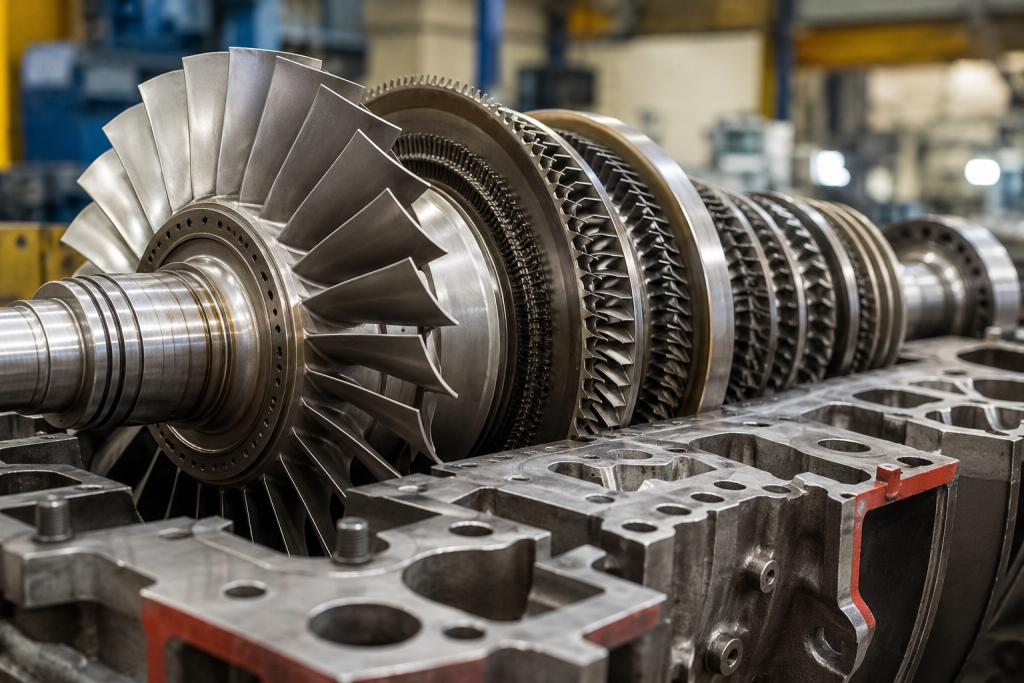
Refurbishment and new component production share several engineering principles. Both require accurate dimensions, suitable materials, controlled machining, and attention to the operating environment.
Knowledge gained through gas turbine parts manufacturing can support refurbishment activities because technicians need to understand component geometry, material behavior, tolerances, and the stresses experienced during operation.
Manufacturing experience can also help determine whether a damaged area can be machined back to an acceptable dimension or whether a repair method is technically appropriate. For complex components, understanding the original manufacturing process can provide useful context during restoration.
Steam and Gas Turbine Work Require Different Expertise
Although steam and gas turbines both rely on rotating machinery, their operating environments differ considerably. Gas turbines encounter combustion temperatures and conditions that place particular demands on hot-section materials and coatings. Steam turbines have their own concerns related to steam conditions, moisture, erosion, corrosion, and pressure stages.
Experience in steam turbine parts manufacturing can therefore be valuable within the broader turbine industry, but individual components still require equipment-specific engineering knowledge.
A refurbishment provider should understand the particular turbine model, component design, material specifications, and operating conditions rather than treating all turbine parts as interchangeable products.
Selecting a Turbine Parts Supplier
The supplier’s technical capabilities should be reviewed before purchasing refurbished components. A suitable turbine parts supplier should be able to provide clear information about component identification, inspection procedures, repair history, dimensions, materials, and applicable quality checks.
Documentation matters because a refurbished component without adequate traceability can create uncertainty during maintenance planning. Buyers should ask whether inspection reports, repair records, material information, and dimensional verification are available for the component being supplied.
It is also useful to establish how the supplier handles rejected parts. A clear inspection and acceptance process helps ensure that components outside acceptable limits are not simply repaired without technical justification.
Cost and Service-Life Considerations
The financial value of refurbishment depends on more than the purchase price. Maintenance teams should consider inspection costs, repair requirements, expected service life, installation expenses, lead time, and the consequences of premature component failure.
A properly refurbished component may provide useful service while reducing dependence on newly manufactured replacements. However, refurbishment should not be selected solely because it is cheaper. The component’s operating role and failure consequences need to be considered.
For critical rotating or hot-section components, engineering evaluation should take priority over short-term savings.
A Practical Part Evaluation Process
A structured evaluation can make refurbishment decisions easier. Maintenance teams can begin by identifying the exact component and reviewing its service history. The next step is condition assessment through visual and non-destructive inspection.
After inspection, the component can be classified as suitable for refurbishment, suitable for limited repair, or unsuitable for further service. Repair work should then follow documented procedures, with final inspection confirming dimensions and surface condition.
Records should be retained throughout the process. This creates a traceable history that can assist with future maintenance decisions.
Final Considerations for Turbine Maintenance
Refurbishment provides another way to manage the lifecycle of industrial turbine components without automatically replacing every used part. Its value depends on sound inspection, appropriate repair methods, material knowledge, dimensional accuracy, and proper documentation.
For operators planning turbine maintenance, refurbished industrial gas turbine parts can be considered alongside new components after technical condition, compatibility, expected service life, and documentation have been assessed. A careful evaluation helps determine where refurbishment makes engineering and economic sense while keeping equipment reliability at the center of the decision.