Buying your first drone is exciting right up until you face forty models, a wall of specifications, and prices from thirty dollars to three thousand. The best drones for beginners share a specific character: they are light enough to be legal almost anywhere, stable enough to fly themselves while you learn, and tough enough to survive the mistakes every new pilot makes. Everything else — 8K video, extreme range, racing speed — can wait for your second drone.
This guide explains what actually matters in the best drones for beginners, what to skip, and how to match a budget to the flying you really want to do.
Start With Weight: The Under-250-Gram Advantage
The most important number on a beginner drone’s spec sheet is its weight. In many countries, drones under 250 grams sit in the lightest regulatory category, which can mean simpler registration rules and fewer restrictions — though you must always check your local laws, since they vary and change. Light drones are also quieter, less intimidating in a park, and far less destructive in the inevitable first crash.
Nearly all of the best drones for beginners cluster in this weight class for good reason. A sub-250-gram drone with a decent camera will teach you composition, control, and confidence. If you later fall in love with aerial photography, you will know exactly which upgrade you want — and you will still use the little one for travel.
The Features That Actually Matter
GPS positioning is the beginner feature that matters most. A GPS drone holds its position in wind, returns home automatically when the battery runs low or the signal drops, and stays where you leave it when you take your hands off the controls to think. Without GPS, a cheap drone drifts with every breeze and your first flight becomes a wrestling match.
Next, look at the camera gimbal. A three-axis mechanical gimbal produces smooth, watchable footage; electronic stabilization alone cannot match it. Flight time matters too: advertised figures are optimistic, so expect about 70 percent of the claim in real conditions, and budget for a second battery from day one. Obstacle sensing is genuinely helpful but not essential if you fly in open spaces. When comparing the best drones for beginners, rank them: GPS, gimbal, battery, then camera resolution — in that order, not the order marketing uses.
What to Skip on Your First Drone
Resist the spec-sheet temptations. Extreme range is useless when the law in most places requires you to keep the drone in sight. Huge zoom numbers are usually digital crops that destroy quality. Racing drones are thrilling and completely wrong for learning photography — they have no stabilization, no GPS hover, and a learning curve measured in crashes.
Also skip the ultra-cheap toy drones unless the goal is simply indoor fun. A thirty-dollar drone with brushed motors and no GPS teaches you that drones are frustrating and uncontrollable, which was true in 2012 and is not true now. The best drones for beginners start at prices that buy real stabilization and a real camera — think of it as the difference between learning piano on a tuned instrument and on a toy keyboard.
Learn the Rules and the Craft Together
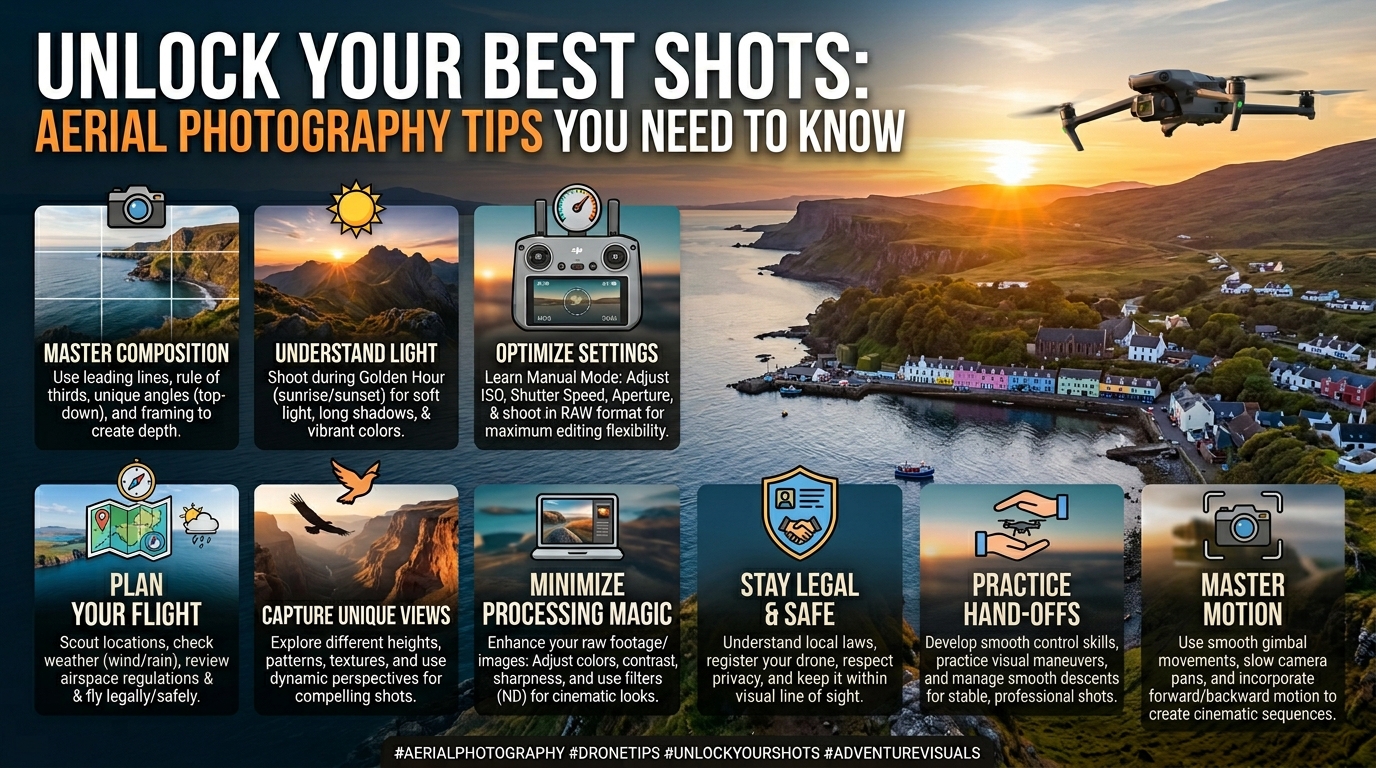
Good pilots are made by short, frequent practice sessions in boring places: an empty field, twenty minutes, one skill at a time. Fly squares, then circles, then figure-eights. Practice returning and landing manually so the automatic systems are a backup, not a crutch. Check the weather — wind at treetop height is stronger than at ground level — and respect no-fly zones around airports, people, and wildlife.
Aerial filming also teaches you to look at familiar subjects differently, from sports to landscapes. Coverage of athletes like this biography of French defender Lilian Raolisoa is the kind of story modern broadcasts now illustrate with sweeping drone shots of stadiums and training grounds — a reminder that the camera skills you build with a beginner drone are the foundation of professional aerial work. Start humble, but know the craft has a real ceiling worth climbing toward.
Budget Honestly: The Drone Is Not the Whole Cost
Price your first setup as a kit, not a drone. Add a second or third battery, spare propellers, a carry case, a fast memory card, and possibly registration fees and insurance if your country or flying style requires them. Buying the kit version manufacturers offer usually beats assembling these separately.
It is also worth paying attention to how brands build communities and support around their products, because a beginner needs tutorials and help more than raw specs. Partnerships and sponsorships — the way a betting brand teamed up with Emmanuel Eboué to reach fans across Africa — show how seriously companies invest in engaging their audience; the drone makers worth your money invest the same energy in beginner guides, firmware updates, and responsive support forums. A drone from a company that teaches is worth more than a marginally better camera from one that vanishes after the sale.
A Simple Practice Plan for Your First Month
Week one: takeoffs, hovering, and landings in one open spot until they are boring. Week two: slow squares and circles, both directions, keeping the drone facing away from you. Week three: flying with the drone facing you, when controls reverse and most beginners get confused — slow is smooth, smooth is fast. Week four: gentle camera moves, rising reveals and slow orbits around a tree, reviewing footage critically each evening.
By the end of that month, the best drones for beginners have done their job: the controls feel natural, and you are thinking about shots instead of survival. That is when the hobby truly begins.
Conclusion
The best drones for beginners are light, GPS-stabilized, gimbal-equipped, and backed by a company that teaches. Skip the range races and racing drones, budget for the full kit, and give yourself a month of structured practice in open spaces. Choose well and your first drone will not gather dust — it will be the tool that taught you to see your own neighborhood from the sky.