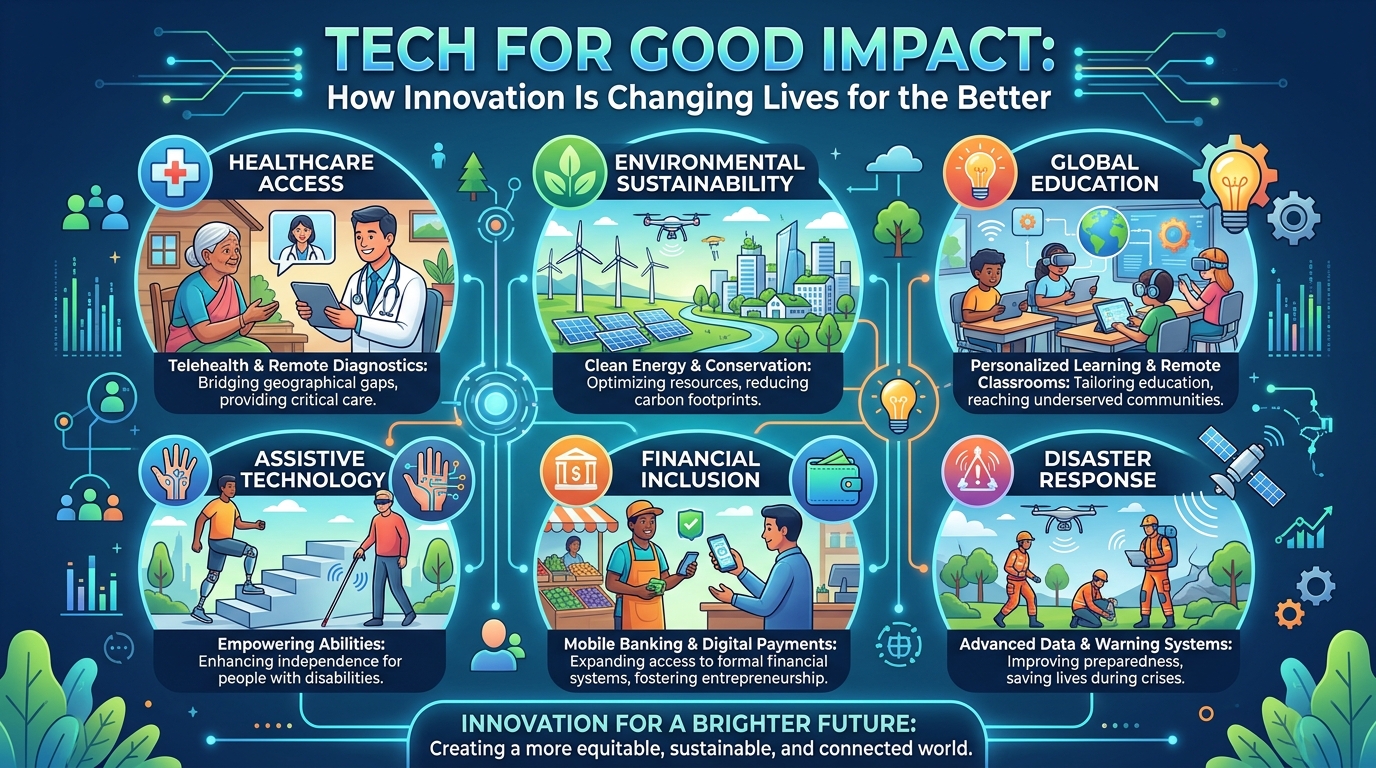

Technology in 2026 is no longer just about convenience, speed, or entertainment. A growing movement called “Tech for Good” focuses on using innovation to solve real-world problems and improve human lives. From healthcare and education to climate action and accessibility, modern technology is becoming a powerful tool for social impact. This shift shows that innovation is not only about profit but also about creating a better and more inclusive world.
Technology in Healthcare Transformation
One of the most powerful impacts of technology is seen in healthcare. Digital health systems, AI diagnostics, and telemedicine platforms are improving how patients receive care. Doctors can now analyze medical data faster and more accurately using artificial intelligence tools.
Remote healthcare services allow patients in rural or underserved areas to consult doctors without traveling long distances. Wearable devices also help track heart rate, sleep patterns, and other health indicators in real time, making preventive care more effective.
Education Made Accessible Through Innovation
Technology has completely transformed education by making learning accessible to everyone. Online learning platforms, virtual classrooms, and AI tutors allow students to study from anywhere in the world.
These tools are especially helpful for students in remote areas who previously had limited access to quality education. Interactive learning apps and video-based lessons also make education more engaging and easier to understand.
AI for Social Good Applications
Artificial intelligence is playing a major role in solving social challenges. AI systems are being used to predict natural disasters, improve traffic management, and detect diseases at early stages.
Organizations also use AI to analyze large datasets for humanitarian efforts, helping them distribute resources more efficiently. This makes decision-making faster and more accurate in critical situations.
Technology in Environmental Protection
Environmental protection is another key area where technology is making a difference. Smart sensors, satellite monitoring, and data analytics are being used to track pollution levels and climate change patterns.
Renewable energy technologies like solar panels and wind turbines are also becoming more efficient, helping reduce dependence on fossil fuels. These innovations are essential for building a sustainable future.
Digital Accessibility and Inclusion
Tech for Good also focuses on making digital tools accessible to everyone, including people with disabilities. Screen readers, voice assistants, and adaptive interfaces help users interact with devices more easily.
Modern apps are designed with inclusive features such as high-contrast modes, text scaling, and voice navigation. This ensures that technology is usable for people of all abilities.
Financial Inclusion Through Fintech Solutions
Financial technology has made banking and financial services more accessible to millions of people. Mobile banking apps, digital wallets, and microfinance platforms allow users to manage money without traditional banking barriers.
This is especially important in developing regions where access to physical banks is limited. Fintech solutions are helping people save, invest, and transfer money more easily and securely.
Smart Cities and Urban Innovation
Smart city technology is improving urban living through connected infrastructure and data-driven systems. Traffic management systems, smart lighting, and waste monitoring solutions make cities more efficient and environmentally friendly.
These technologies help reduce congestion, save energy, and improve overall quality of life for citizens.
Technology in Disaster Response
During natural disasters, technology plays a critical role in saving lives. Early warning systems, satellite imaging, and communication networks help authorities respond quickly and effectively.
Drones are also used to assess damage and deliver emergency supplies to affected areas, improving rescue operations significantly.
Ethical Challenges in Tech for Good
While technology brings many benefits, it also raises ethical concerns such as data privacy, digital inequality, and algorithm bias. Ensuring that technology is used responsibly is essential for long-term positive impact.
Developers and organizations must prioritize transparency, fairness, and user protection when designing social impact technologies.
Future of Tech for Good Innovation
The future of technology for good is expected to grow rapidly with advancements in AI, robotics, and connectivity. Innovations will continue to focus on solving global challenges such as poverty, healthcare access, and climate change.
As more organizations adopt socially responsible innovation, technology will play an even bigger role in shaping a better and more sustainable future.
FAQs
What does Tech for Good mean
It refers to using technology to solve social, environmental, and humanitarian problems
How is technology helping healthcare
Through AI diagnostics, telemedicine, and wearable health devices
Can technology improve education
Yes it makes learning more accessible and interactive for students worldwide
What is digital inclusion
It ensures that technology is accessible to all people including those with disabilities
Is technology helping the environment
Yes through renewable energy, smart monitoring, and pollution tracking systems
Conclusion
Tech for Good demonstrates how innovation can be used beyond commercial purposes to create meaningful social impact. From healthcare and education to environmental protection and financial inclusion, technology is improving lives across the world. As innovation continues to evolve, its role in building a more inclusive, sustainable, and equitable future will become even more important.