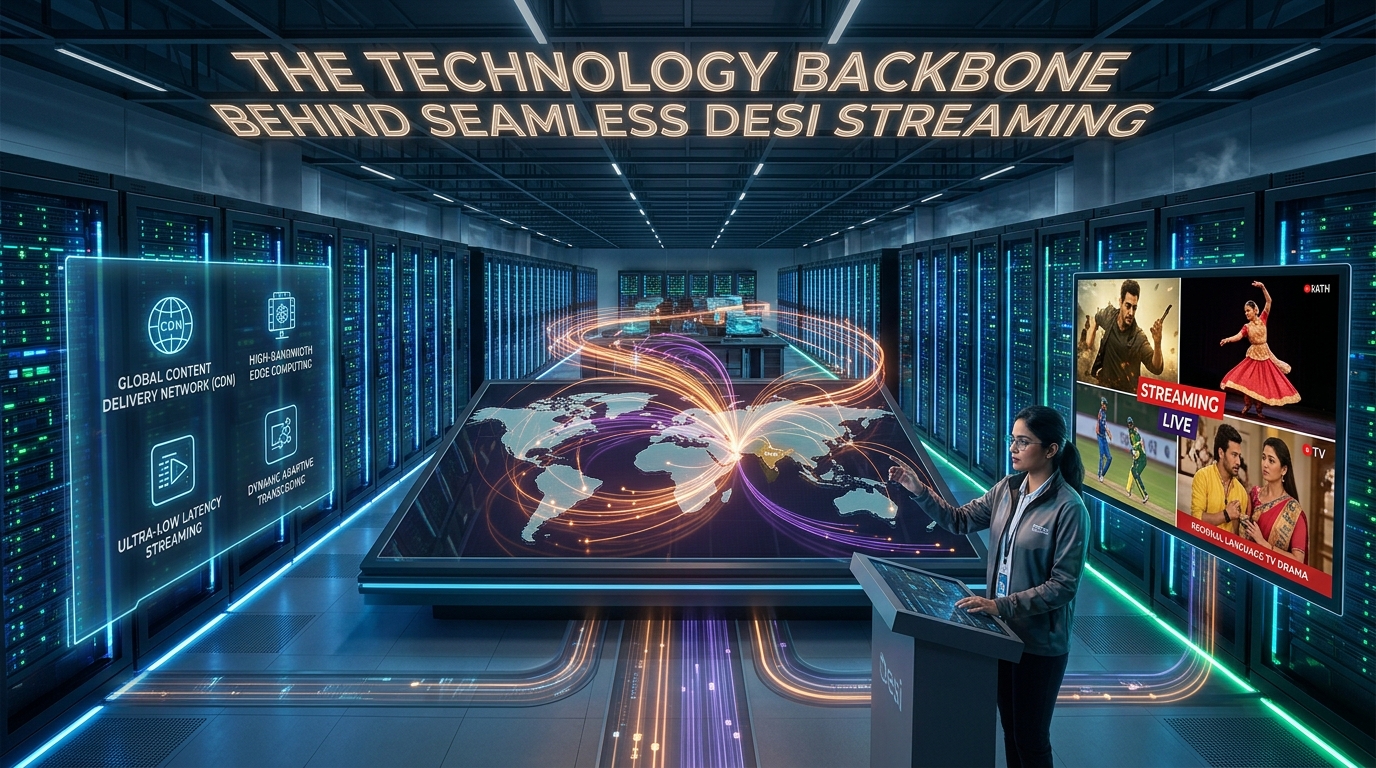

Desi streaming platforms have seen massive growth in recent years as users increasingly shift from traditional television to online entertainment. In 2025, seamless streaming has become a key expectation, especially for South Asian audiences who consume dramas, movies, sports, and live events on mobile devices. Behind this smooth experience lies a powerful technological backbone that ensures fast delivery, high quality, and uninterrupted playback even on unstable internet connections.
Content Delivery Networks Powering Fast Streaming
Content Delivery Networks (CDNs) are one of the most important technologies behind seamless streaming. They work by storing copies of video content on multiple servers across different locations, ensuring that users receive data from the nearest possible server.
This reduces buffering time and improves streaming speed significantly. For desi streaming platforms, CDNs are essential because they help deliver content efficiently to users across cities, rural areas, and international regions where internet quality may vary.
Adaptive Bitrate Streaming for Smooth Playback
Adaptive bitrate streaming is another critical technology that ensures videos play smoothly regardless of internet speed. Instead of streaming one fixed quality, the system automatically adjusts video quality in real time based on the user’s connection.
If the internet speed drops, the video quality reduces slightly to prevent buffering. When the connection improves, the quality increases again. This dynamic adjustment creates a seamless viewing experience without interruptions.
Cloud Infrastructure Supporting Scalability
Cloud computing plays a major role in powering desi streaming platforms. It allows platforms to store massive amounts of video data and scale services during peak traffic hours such as drama releases or live sports events.
With cloud infrastructure, streaming platforms can handle millions of users simultaneously without crashing. It also improves data management, security, and accessibility across devices.
Video Compression and Encoding Technologies
Video compression technologies reduce file sizes without significantly affecting visual quality. This is essential for streaming platforms where large amounts of data need to be delivered quickly.
Modern encoding techniques like H.264 and H.265 help optimize video delivery, ensuring high-definition content can be streamed even on slower internet connections. This makes streaming more accessible for users in regions with limited bandwidth.
Low-Latency Streaming for Live Content
Live streaming, especially for sports and events, requires extremely low latency to ensure real-time viewing. Technologies like WebRTC and optimized streaming protocols help reduce delays between live action and user playback.
For desi audiences watching cricket matches or live shows, low-latency streaming ensures they experience events almost instantly without noticeable delays.
AI-Powered Recommendation Systems
Artificial intelligence is widely used in streaming platforms to enhance user experience through personalized recommendations. AI analyzes user behavior, watch history, and preferences to suggest relevant content.
This helps users discover new dramas, movies, and shows they are likely to enjoy, increasing engagement and time spent on the platform.
Multi-Device Synchronization
Modern streaming technology allows users to switch between devices seamlessly. Whether watching on a smartphone, tablet, or smart TV, playback can continue without interruption.
This synchronization is powered by cloud-based user profiles that store viewing progress and preferences across devices. It ensures a consistent experience regardless of how or where content is accessed.
Data Optimization for Mobile Users
Since a large portion of desi audiences stream content on mobile devices, platforms focus heavily on data optimization. Techniques like adaptive streaming, caching, and compression reduce data consumption.
This makes streaming affordable and accessible, especially in regions where mobile data costs are a concern.
Security and Digital Rights Protection
Streaming platforms also rely on strong security systems to protect content from piracy and unauthorized access. Digital Rights Management (DRM) technologies ensure that only authorized users can access premium content.
Encryption protocols protect data during transmission, maintaining both user privacy and content integrity.
Future of Desi Streaming Technology
The future of desi streaming is expected to become even more advanced with the integration of AI, 5G, and immersive technologies like AR and VR. These innovations will make streaming more interactive and personalized.
As internet infrastructure improves, users can expect ultra-high-definition content, instant loading times, and smarter recommendation systems that redefine digital entertainment.
FAQs
What is CDNs in streaming technology
CDNs are networks of servers that deliver content from the nearest location to the user
Why is adaptive bitrate important
It ensures smooth playback by adjusting video quality based on internet speed
How does cloud computing help streaming platforms
It provides storage, scalability, and smooth performance for large user traffic
What is low-latency streaming
It reduces delay between live events and user viewing
Will streaming improve in the future
Yes with AI, 5G, and better infrastructure it will become faster and more immersive
Conclusion
The technology backbone behind seamless desi streaming is built on powerful systems like CDNs, cloud computing, adaptive streaming, and AI-driven optimization. Together, these technologies ensure smooth, high-quality, and accessible entertainment experiences for users across different regions. As innovation continues, streaming will become even faster, smarter, and more immersive in the coming years.